|
|
 |
|
|
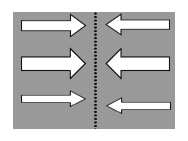
You know what you are concerned about. You know what needs to change. Ask this: 'why hasn't it happened already ?'
Try mapping out the forces for and against what you want to happen. Draw a map of the problem - the people involved, the organisations, the
institutions - work out exactly what the mechanisms are for the decisions you want to change.
|
|
|
|
|
From this, identify potential allies and opponents. From that, work out who your target audience is for each step (see guidelines 4, 5, 6). Look at it
from their point of view.
Check - how will you now change the balance of forces for and against action in order to overcome the obstacle? If you don't know the answer to
this, how can you specify an objective to be achieved?
|
|
|
|
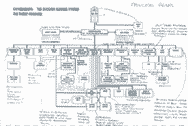
Click the image on the right for an example:
A map of the UK Government decision making system applied to the licensing of the THORP nuclear reprocessing plant, Sellafield, Cumbria. |
|
|
|
|
 Analyse the forces